
Water Heaters
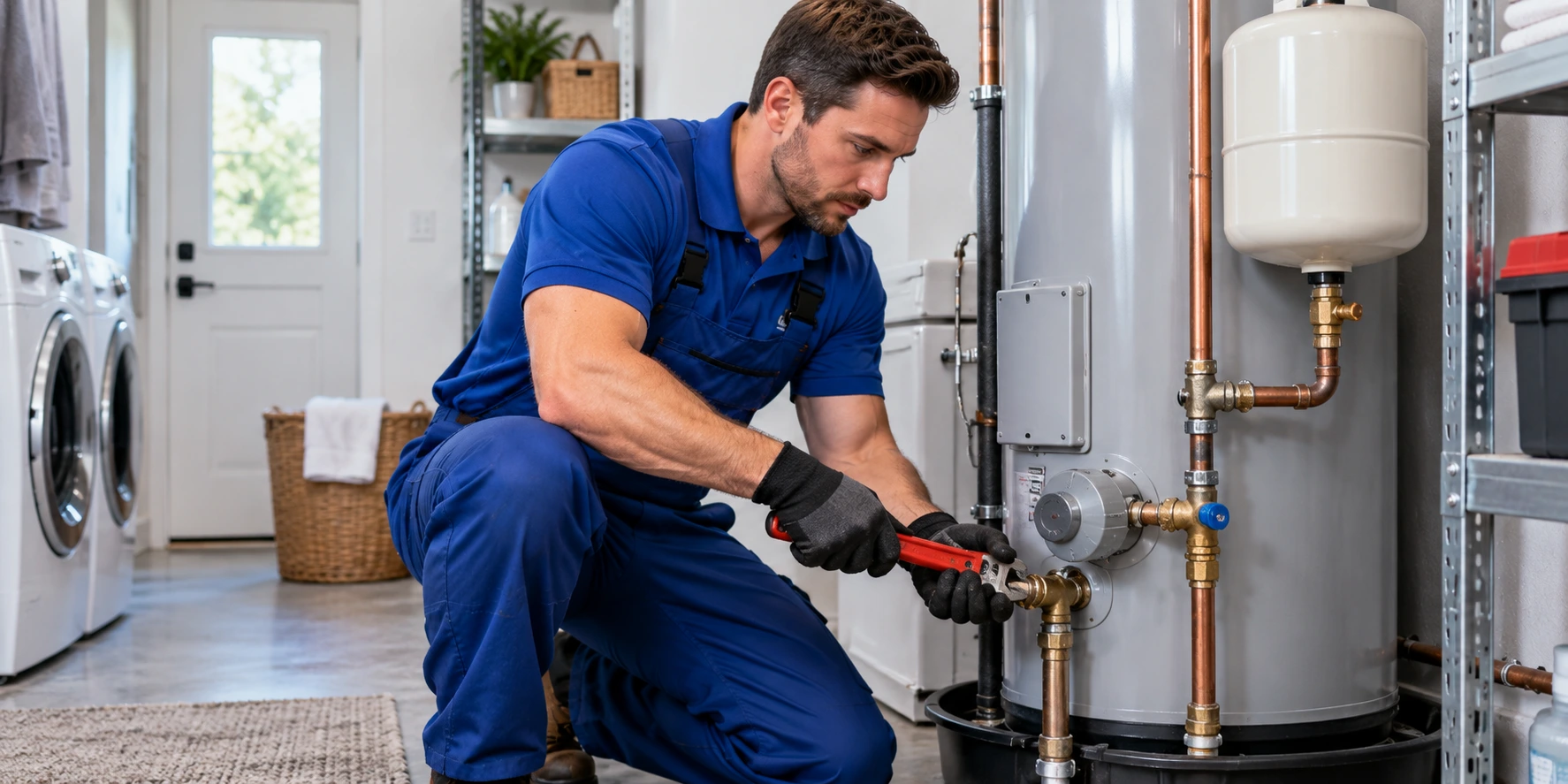
Water heater repair in Cleburne when heat drops out
When heat disappears at the shower in Cleburne, we treat water heater repair in Cleburne, TX as a supply problem first and a tank problem second. Cleburne Pipe Pros helps homes and businesses in houses, townhomes, condos, and businesses across Cleburne, Keene, Rio Vista, Grandview, and Alvarado when the tank, burner, or elements will not recover. We also take pipe repair, leak detection, emergency plumbing, drain cleaning, fixture installation, and garbage disposal repair when a heater soaks a closet.
On Prairie Avenue near downtown, older homes still feed galvanized into aging tanks. Baker Farms and Belle Lagos run PEX into heaters from the 2000s. Homes in 76033 mix both, so the first reading at the tank shutoff matters more than a guess at the thermostat.
We measure incoming pressure, confirm power or flame, and inspect the nipples and unions before we open the shell. We leave the closet dry, the valves labeled, and the T&P discharge clear. These calls come in 24/7, including nights when a garage heater weeps onto a slab.
The sequence below is the same whether the complaint is no hot water, a leaking water heater, or a tank that will not light. We start at the supply because a starved inlet mimics a failed element. Once those readings are on paper, we move to the burner, the thermostats, and the shell.
Other Services
Contact Us Today!
(817) 506-6604
Open 24 Hours
Reliable plumbing solutions for homes throughout Cleburne, TX.
Professional repairs and installations completed with care, attention, and lasting results.
Need urgent plumbing help? Call Cleburne Pipe Pros for fast assistance with leaks, burst pipes, backups, and other plumbing emergencies.
What we test first on a cold heater
A dead shower can be a tank, a breaker, or a starved inlet, and the order of tests is what keeps those from getting mixed. We start at the shutoff on the cold side because Cleburne houses from the ranch era still hide galvanized on the way in. Each reading rules something out before we pull a panel. The steps below are the same on an electric water heater and a gas water heater.
Static pressure at the tank shutoff
We read static pressure at the tank shutoff first because a starved inlet mimics a failed lower element on ranch stock. Clay movement and galvanized constriction on the meter run drop the number before the tank ever sees it. A healthy house here sits near typical city pressure. A low reading sends us to the supply, not the thermostat, and that order keeps us from swapping parts that never failed.
Power, flame, and the control circuit
Next we prove the disconnect, the breaker, or the gas control so we are not chasing a dead tank that never had energy. On an electric water heater we check voltage at both thermostats and look for a tripped high-limit. On a gas water heater we confirm the valve is open and the control is asking for flame. A dark board with live voltage points to the thermostat, not the plumbing.
T&P valve, anode, and tank shell
Then we inspect the T&P valve, which relieves pressure on the tank, along with the anode port and the shell. Moisture at the pressure relief valve discharge is not the same as a wet union. We wipe the top, watch the drain, and look for rust blooms at the nipples. A dry shell with a spent anode is still a repair conversation. A weeping seam is not.
Recovery, elements, and the burner
Last we measure how fast the tank comes back after a known draw. A heating element replacement or a thermostat replacement is the usual fix when one circuit is open and the lining is intact. A weak burner, a clogged orifice, or heavy sediment buildup explains a tank that never catches up. Those numbers decide water heater repair the same day versus a pull.
Safe checks before you pick up the phone
A few looks at the tank and the nearest tap help us know whether the house still has cold-water pressure. None of these steps require tools, and none of them replace the readings above. Stop at anything that feels hot, wet, or out of place and wait for the visit.
- Confirm the breaker or the tank disconnect is on
- See whether cold water still has pressure at a nearby tap
- Look at the T&P discharge for moisture without lifting the lever
- Note whether the drip is at a union, the drain, or the base
- For electric units, check that the closet switch was not bumped off
Leave these alone until we are on site.
- Do not drain the tank into a finished room
- Do not keep resetting a tripped high-limit
- Do not plug a dripping T&P valve
- Do not wrench on a wet union with the house still in pressure
- Do not relight a pilot in a closed garage without ventilation
Problems we see on Cleburne hot water heaters
No hot water or not enough heat
A cold shower in a Cleburne ranch is often a recovery problem, not an empty tank. Upper and lower elements on an electric water heater fail in sequence, and a gas water heater with a weak burner never catches up after back to back baths. Along Henderson Street, original tanks sit in garages that swing from freeze to North Texas heat, which shortens thermostat life. Families notice it first on school mornings when everyone needs heat at once.
Signs it is time to call
- The shower goes cold after a few minutes even though the tank feels warm on top
- Only one bathroom still has heat while the rest run lukewarm
- The tank is silent and the upper thermostat is tripped
- An electric water heater not working still has a live breaker
- Someone already tried to fix no hot water fast by flipping the disconnect
- Hot and cold lines feel the same temperature at the first fixture
- The tub never gets past tepid no matter how long it runs
We start at the shutoff, then prove voltage or flame, then test each element or the burner before we talk about water heater installation. A heating element replacement or a thermostat replacement solves a clean electrical failure. A cracked flue or a tank that will not hold pressure is a different conversation. Garage heat in summer cooks the controls on these same units.
A leaking water heater at the tank
Water on a garage slab is easy to blame on the tank, and sometimes that is fair. More often in Cleburne the first failure is a galvanized nipple, a dielectric union, or the inlet valve, especially where copper was joined to steel. A water heater leaking from the top can look like a flood while the glass lining is still intact. Catching that early keeps the closet from swelling.
What you might notice first
- Drips at the cold inlet or the hot outlet while the shell is dry
- A wet dielectric union that stains the pan rust brown
- Water tracking down the T&P pipe from a loose fitting, not the valve
- A drain valve that weeps after someone tried to flush the tank
- A damp ring at the base that returns after you wipe it
- The pan is full but the tank jacket still looks clean
- The leak grows when someone opens a hot tap
We isolate the tank, drop pressure, and watch which joint actually moves water. Nipples and unions come out with the supply still sound when the shell is dry. A wet seam, a rotten drain opening, or rust through the jacket means the unit comes out. Freeze nights in an uninsulated garage make those joints fail first.
Tankless units that will not heat
West-side streets in Baker Farms and Belle Lagos added tankless water heater units to houses on PEX, and those heaters live or die at the inlet screen. Irrigation season loads the screen with grit, then the unit locks out on low flow. A tankless water heater not heating after a dry stretch is often that screen, not a failed exchanger. The error code on the display is a clue, not a complete diagnosis.
How this shows up in the house
- The unit fires, then shuts down before the shower warms
- Hot water reaches one fixture and never the next
- The inlet screen is packed with grit when we pull it
- The flow sensor chatters and the unit never holds flame
- Cold water pressure is fine at a hose bib while the heater starves
- Someone already descaled once and the lockout returned
- The unit shows a flow or inlet code after yard watering
We pull the screens, check gas or voltage, and verify the flow sensor before we open the exchanger. A clean screen and a sound heat exchanger put heat back in the line. A scaled exchanger or a cracked pack is a replacement talk. Dry summers that pull moisture out of the yard also pull grit toward those inlets.
Rusty or discolored hot water
Brown water at a hot tap with clear cold water usually means the tank, not the city main. City of Cleburne water arrives as surface water from Lake Pat Cleburne and Lake Aquilla plus wells in the Trinity Aquifer, and the lining plus the anode are what stand between that water and the steel. When the anode is gone, rusty water from the water heater shows up in the first-floor baths first. Prairie Avenue steel tanks show this more than PEX-fed west-side units.
Clues at the tap and the tank
- Hot taps run rust while cold taps stay clear
- The tank drain dumps brown water and grit
- Stains return in the tub after the faucet screens are cleaned
- The anode rod comes out as a thin wire
- Hot water smells metallic after the tank sits overnight
- A new faucet still throws color on the hot side only
- The dip tube crumbs show up in the aerators
We drain a sample from the tank, not only the faucet, and we pull the anode if the port will turn. Anode rod replacement can slow the rust if the lining is still intact. Brown water plus scale cakes at the drain is a tank that should come out. Waiting only stains more fixtures.
Strange noises from the tank
Popping from the closet is steam flashing under a crust of sediment on the bottom of the tank. A water heater making loud noises on a slab-on-grade house often sits in a garage where we can drain it and tap the jacket. The sound is annoying, and it is also a sign the burner or the lower element is cooking through sludge. Left alone, that crust burns the lining.
Sounds that point to sediment
- Popping or rumbling that grows during a long shower
- A crackle right after the burner or element kicks on
- The tank jacket ticks as it heats, then goes quiet
- The drain runs sandy water when cracked open
- Recovery takes longer than it did last winter
- The lower element keeps failing after replacements
- The pan is dry, so the noise is not a leak
A water heater flush helps if the lining is intact and the anode still has mass. We drain, inspect the dip tube, and feel whether the bottom still has steel. If the drain runs rust and the bottom sounds thin, we stop flushing and plan a replacement. Surface water minerals settle faster in tanks that rarely get opened.
Pilot light and burner problems
A pilot that dies overnight is a thermocouple, a draft, or a valve, not a mystery in the pipes. Garage units in Cleburne see this after freeze and thaw, when cold air dumps across the burner door. A yellow flame, soot on the door, or a pilot light out after a brief outage all belong in the same visit. The control has to be proved, not guessed.
Flame and control clues
- The pilot lights, then drops out when the door goes back on
- A gas water heater pilot light will not stay lit after a freeze
- The burner whooshes, then goes dark mid cycle
- Soot streaks the access door and the draft hood
- The gas valve clicks and never opens
- The flame sits yellow instead of a steady blue cone
- The tank is warm on top and cold at the bottom after an hour
A gas water heater with a weak thermocouple will not keep a pilot, and a dirty orifice makes a yellow flame that soots the door. We measure millivolts, inspect the draft hood, and prove supply at the valve before we change parts. If you smell gas or suspect a gas leak, go outside immediately and call 911. This is a serious emergency that needs urgent attention from the gas company. After the area is safe we return to the burner, the thermocouple, and the pressure that keeps the flame stable.
Water heater not turning on
A silent tank with no lights can still have a live panel, and that is why we meter before we buy parts. An electric water heater not working is often a tripped high-limit after a dry fire or a failed upper thermostat. A gas control that never wakes up can be a thermocouple, a melted wire, or a valve that dropped out. The water heater not working is the symptom. The reading is the cause.
Early warnings at the switch
- The closet switch is on and the tank is still dark
- The high-limit is tripped and the tank is cold
- The breaker holds, then trips again after a short heat cycle
- No click at the gas valve when a tap is opened
- The display on a newer unit is blank with power at the disconnect
- Someone reset the button twice and heat never returned
- The upper element tests open while the lower still reads through
We prove the disconnect dead or live, then test each control in order so we do not skip a melted wire. A thermostat replacement or a heating element replacement is enough when the lining is dry. A control that has overheated against a garage wall may need the whole valve. Same-day diagnosis on an accessible tank is how we settle that on the first visit.
Sediment and poor recovery
Showers that fade and never catch up are often sediment, not a tank that is too small. Minerals from Lake Aquilla and the Trinity wells settle on the bottom, and the burner or the lower element spends its time heating sludge. Poor recovery then looks like no hot water even though the upper third of the tank is scalding. A flush only helps while there is still lining under that crust.
Recovery clues after showers
- The second shower is cold even after an hour wait
- The tank feels hot on top and barely warm down low
- The drain coughs grit, then runs rusty
- A recent water heater flush barely changed the wait time
- The gas bill or the electric use climbed with no extra baths
- The lower element failed twice in one season
- The dip tube is brittle or missing when we open the inlet
We measure recovery against a known draw, then inspect the drain and the anode. If the bottom is still sound, a thorough flush and a new dip tube can bring heat back. If the lining is open, water heater replacement is the cleaner path. City of Cleburne surface water leaves that sediment whether the tank is ten years old or twenty.
When we repair the tank versus replace it
The choice is not age on a sticker. It is the shell, the nipples, the elements or burner, and the supply that feeds them. When to replace versus repair a water heater starts with a dry jacket and a sound lining. A single open element, a weak thermocouple, or a T&P that weeps at the thread can be repaired, and the house keeps its tank. A wet seam or a nipple port that has lost its steel is a pull, even if the paint still looks fine.
Nipples and unions fail first on older Cleburne houses where galvanized met copper. We cut those fittings out, chase the ports, and put dielectric unions back so the leak is not the tank talking. If the port itself is egg-shaped or the threads are gone, the shell is done. That is the moment we replace an old water heater instead of stacking another brass fitting on rotten steel. The pan, the drain, and the T&P discharge get set with the new unit so the next leak has somewhere to go.
Elements, thermostats, and burners are the other repair path. A clean electrical failure or a gas valve that still has a sound heat exchanger is worth the part. Stacking a third lower element into a tank full of sediment is not. The best water heater for an older home is often a tank that can tolerate the incoming pressure and the garage swing, not a tankless unit starved by galvanized. We match capacity to the baths that actually run, then we set the temperature and the T&P so the new unit is not fighting the old plumbing.
Supply is the last vote. A pinched meter run or a failing buried line will kill a new heater the same way it killed the last one, so we fix that first or we say so. How long water heater replacement takes depends on access: a garage slab swap is a short visit once the unit is on site, while a condo closet with a pan and a tight hatch takes longer because the pull has to be planned. Water heater installation on a ranch garage is simpler than a stacked closet, and we say which one you have before the old tank comes out. The new unions, the vacuum breaker where it belongs, and a dry floor are the last checks, not an afterthought.
Why this heater work stays with our crew
Cleburne Pipe Pros treats the heater as equipment at the end of the house lines, so the visit is built around gauges, not a catalog of tanks. The examples below are what the truck and the street actually support. None of it is a slogan. It is the order we already described.
We prove the supply before we touch the tank
A low reading at the shutoff looks like a dead element until it is metered. The truck on Vantage Dr carries a pressure gauge, a multimeter, and nipple kits for galvanized and copper. We write the number down before any wrench turns. That habit saves tanks that were only starved by the line in front of them.
We treat nipples and unions as part of the heater
Leaks at the top of the tank are often fittings, and we stock dielectric unions that match copper, steel, and PEX. Tightening a wet galvanized nipple only hides the drip until the next heat cycle. Cutting it out and chasing the port is slower in the moment and cleaner a week later. The closet stays dry because the joint is new, not because a rag was stuffed behind it.
We take tank calls through the night
Cleburne garages freeze and overheat on the same slab, and a weeping T&P does not wait for morning. Our crew runs 24/7 so the shutoff and the pan get handled before the hallway swells. We still do the pressure reading first. Parts come off only after the water is stopped.
We leave the closet labeled and dry
When the work is done the valves have tags, the T&P discharge is open, and the floor is wiped. Same-day diagnosis on an accessible garage tank means those checks happen before we leave the first time. A condo closet gets the same labels even if the pull takes a second trip. The next person to open that door should see what we saw.
What clay and city water do to a heater
Heiden clay and Houston Black clay lift slabs and shear the buried run that feeds the tank, so a heater in Cleburne can look failed when the inlet is pinched. Hard freezes in a garage stall burst poorly insulated nipples and T&P lines on the way into the shell. North Texas heat and irrigation then dry that same clay, drop yard moisture, and stress the meter run again. We test that supply before we condemn the tank.
Hot water heater work in nearby towns
The same tank tests travel with us to the four towns around Cleburne, and each water system and housing mix changes what fails first. Notes below stay on heaters, nipples, and recovery. Roads and utilities are the ones those towns actually use.
Keene utility closets and original tanks
Keene sits in Johnson County with Trinity Aquifer wells and purchased Johnson County SUD water, so inlet screens and tank sediment do not match city water in Cleburne. Homes from the mid-1980s, plus some mobile homes along US Highway 67 and Old Betsy Road, still hide original tanks in tight closets. We pull those units with the same nipple and pressure checks, and plumbing in Keene follows that order.
Rio Vista heaters along State Highway 174
Rio Vista is a smaller Johnson County town on City of Rio Vista water, with houses along State Highway 174, Central Avenue, and FM 916, and the Nolan River on the west side. Tanks there often sit in one-car garages with short, poorly insulated nipples that freeze sooner than in-town closets. We still start at the shutoff and the T&P before we talk about a new unit.
Grandview groundwater and mixed streets
Grandview runs on City of Grandview groundwater wells, with mixed 1970s to 1990s streets plus newer growth along Interstate 35W and US Highway 81 at McDuff Avenue. Well water and older tanks together mean sediment and slow recovery show up before a dramatic leak. We flush only after the lining and the anode still look worth saving.
Alvarado heaters on 1990s streets
Alvarado sits on City of Alvarado water, with a median year built around 1999, 1990s to 2010s growth, and older in-town streets near Interstate 35W. Many of those garages already have electric water heater units with two elements, and the first failure is often the lower element sitting in sediment. We test both circuits before we price a tank pull, and plumbing in Alvarado uses that same element check.
Questions about no heat, leaks, and rust
Why does a Cleburne ranch lose heat after two showers?
On ranch houses from that era the tank is often undersized for current showers, and the lower element or burner is already coated. We check recovery after a measured draw, then test each element or the burner orifice. Garage units also lose heat through thin jackets when the slab is cold. If voltage and flame are correct but the tank cannot catch up, we talk through water heater replacement using those readings.
What does a leak at the tank nipples usually mean?
On mixed-era streets the nipples and dielectric unions fail before the shell does. We dry the top, watch the T&P, and isolate the inlet and outlet. A water heater leaking from the top is often a union or nipple, which we can replace with the supply still sound. Water at the base can still be a tank seam, and that unit comes out.
Why would a tankless water heater stop heating on the west side?
West-side streets such as Remington Ridge and Fox Meadow often have tankless water heater units with inlet screens that load up after irrigation season. We pull the screens, check the flow sensor, and verify flame or voltage. A tankless water heater not heating after a dry stretch is often scale at the inlet, not a failed heat exchanger. If the exchanger is clogged internally, replacement is the honest path.
Is rusty water from the water heater a tank failure?
Rusty hot water from the taps with clear cold water usually means the anode is gone and the lining is open. We drain a sample from the tank drain, not only the faucet. Prairie Avenue homes with original steel tanks show this more than PEX-fed west-side units. Anode rod replacement can slow it if the lining is still intact.
Questions about replacement and after hours
Who handles water heater repair near me in Cleburne after hours?
Cleburne Pipe Pros handles those after-hours heater calls for houses, townhomes, condos, and businesses in Cleburne. We run 24/7 and we still use the same order: supply pressure, power or flame, then the tank. Nights often mean a garage unit weeping onto a slab after a freeze. If the house is flooding we isolate the tank shutoff and the house valve before any part comes off.
When should we replace versus repair a water heater with a sound shell?
When the shell is dry, nipples are sound, and an element or gas valve has failed, repair is the usual path. When to replace versus repair a water heater turns on leaks at the glass lining, a spent anode with rust in the drain, or a tank that has already been patched. We also weigh incoming pressure because a starved meter run will kill a new unit the same way it killed the old one.
How do you handle water heater repair for a condo closet?
Water heater repair for a condo follows the same tests with tighter access. We measure the closet, confirm the pan and drain, and check that the T&P can discharge without soaking a hallway. Electric water heater work in a stacked closet needs a disconnect we can prove dead. If the tank cannot come out without cutting the enclosure, we plan the pull before we buy the unit.
Why does a gas water heater pilot light go out in a garage?
A standing pilot on a garage unit dies in a hard freeze, after a long outage, or when the thermocouple is weak. A gas water heater pilot light will not stay lit if combustion air is blocked or the gas valve is dropping out. We check the thermocouple millivolts, the orifice, and the draft hood. Relighting without those readings just repeats the outage.
A cold tap in Cleburne is usually the tank, the nipples, or the line that feeds them, and our crew works all three. Water heater repair, water heater installation, and water heater replacement stay with the same visit as the rest of the house. When the wet spot is the buried copper, water line replacement is the right next step. When the slab is wet and the tank is dry, leak tracing belongs with the crew that already opened the heater closet.
Homes and businesses can start with our plumbers in Cleburne or the full list of plumbing services if the problem has moved past the heater. We set the new unit so the T&P, pan, and unions are dry before we leave. The shower should come back hot, and the garage floor should be dry.
Reach out to us for assistance.
ZIPs we cover: 76033, 76031, 76059, 76093, 76050, 76009