
Pipe Repair
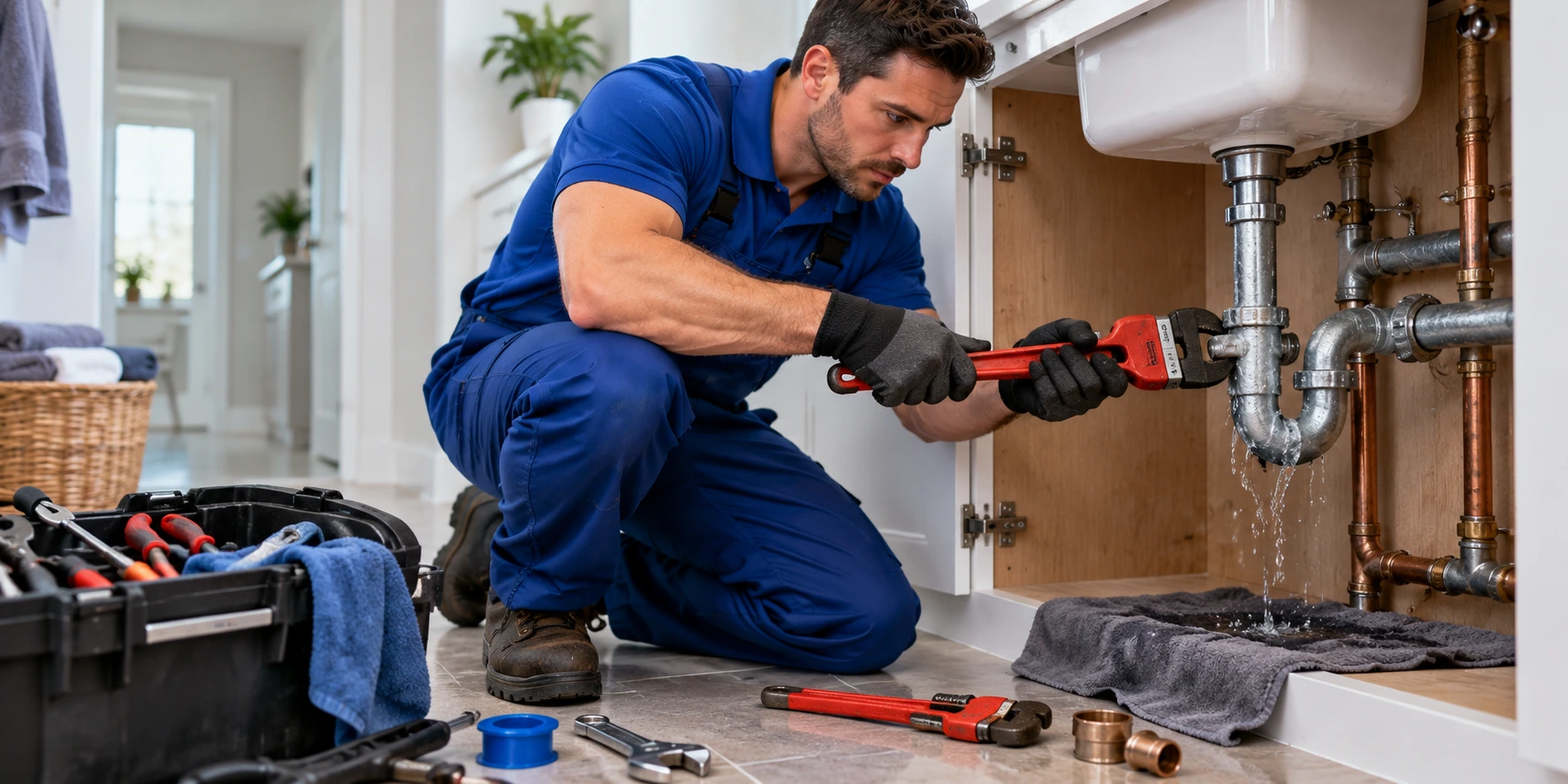
Pipe repair in Cleburne for leaking and buried lines
A split supply line, a wet ceiling, or a meter that never stops turning is why Cleburne Pipe Pros does pipe repair in Cleburne, TX for homes and businesses in houses, townhomes, condos, and businesses. We take the same calls in Keene, Rio Vista, Grandview, and Alvarado, and we answer them 24/7 because water in a wall does not keep office hours. In 76033 we repair copper, galvanized, PEX, and older plastic, and we decide whether a section will hold or the run has to come out.
Along the way we also handle drain cleaning, hot water heater connections, fixture installation, garbage disposal repair, and emergency plumbing when a failed line is feeding those fixtures. Prairie Avenue houses southwest of downtown still carry galvanized steel and cast iron from the 1890s through the 1920s, and those interiors scale down long before the pipe looks bad from the outside. West-side streets such as Baker Farms run PEX and PVC, which fail at fittings and at poorly supported turns rather than from rust.
Isolation and a pressure test come before any cut, so we open only the section that failed. We wipe down the work area and restore water before we leave. The tests at the meter and at the hose bib come next, because that order is what decides the repair.
Other Services
Contact Us Today!
(817) 506-6604
Open 24 Hours
Reliable plumbing solutions for homes throughout Cleburne, TX.
Professional repairs and installations completed with care, attention, and lasting results.
Need urgent plumbing help? Call Cleburne Pipe Pros for fast assistance with leaks, burst pipes, backups, and other plumbing emergencies.
What we test first on a failing pipe
On a pipe call the first useful number is static pressure, not the location of the stain. A gauge on a hose bib with every fixture quiet shows whether the system holds. A falling needle means water is leaving the piping. A steady needle means the complaint may be volume, a fixture, or scale, and that reading rules out an active split before anyone opens drywall.
Static pressure at a quiet hose bib
With the house quiet we hang a liquid-filled gauge on an exterior hose bib or on a boiler drain. The needle is static pressure, the leftover force in the piping when nothing is flowing. If it falls, water is escaping somewhere on the house side of the shutoff. If it holds for several minutes, we stop treating the job as an active split and look at flow, valves, and fixtures instead.
What the meter tells us next
Only after the gauge reading do we open the meter box and watch the low-flow indicator. A still gauge with a creeping meter means the leak is on the buried run from the meter to the house, not in the walls. A falling gauge with a still meter means the loss is inside. That order keeps us from digging a yard because a toilet fill valve is weeping, and it keeps us from opening a ceiling because the setter is the real leak.
Flow at the far bathroom
When pressure holds and the meter is still, we measure volume at the farthest tub with the kitchen faucet open. Galvanized that is rusting shut will starve that tub even though the gauge looks fine. Copper and PEX that are open will keep a steady stream. That flow check is what tells us a coupling at a split will restore the house, or that the interior is too constricted for a patch to matter.
Cut, repair, and the last pressure check
After the readings agree we open the failed bay or the meter run and cut back to sound pipe. The repair matches the material: copper to copper, PEX crimp to PEX, or a listed transition where the code allows it. A second gauge test on the finished section has to hold before we close anything. That first visit often includes a same-day diagnosis written next to the material we found.
While you wait, a few checks are safe and a few are not. Knowing the house shutoff, stopping the washing machine if a ceiling is wet, and photographing a meter that moves with everything off all help. Leave frozen valves, torches, and stop-leak pellets alone until we get there.
- Find the house shutoff and close it if water is still moving
- Turn off a washing machine or ice maker that feeds a wet ceiling
- Open a cabinet if you hear hissing so we can see the fitting
- Note whether the hot water heater pan is dry or standing
- Do not thaw a frozen pipe with a torch or a heat gun on high
- Do not force a meter valve that has not moved in years
- Do not tape over a spray and leave the water on
- Do not cut a wide hole in a ceiling before the line is isolated
Burst lines, wall leaks, freeze splits, and pinholes
Burst pipes that flood a room
A burst line dumps more water in a minute than a slow weep dumps in a day, and in a Cleburne house that often starts on a poorly insulated garage pipe or a fitting that froze then thawed. Floors cup, drywall sags, and a hot water heater pan can overflow if the split is on the supply above it. Stopping the flood is the first mercy. Finding whether the rest of that material can hold is the second.
Signs it is time to call
- Water pouring from a ceiling corner after a loud pop
- A spray at a fitting in the garage or attic
- The meter spinning with every fixture closed
- Loss of water to half the house at once
- A wet garage wall along a hose bib line
- A sudden flood after ice on a pipe thaws
We shut the house valve, cut back to sound pipe, and add a coupling or a new section in the same material. Burst pipe repair on copper gets a like-for-like sleeve. On PEX we cut back and crimp on a dry insertion mark. Houses off State Highway 174 take the same freeze pattern on garage lines, so we look there first after a hard freeze. If the rest of the run is thin, emergency plumbing still stops the water, then we talk about pulling more of the line.
Leaking pipes in walls or ceilings
A leaking pipe inside a wall is slower than a burst and easier to miss until stain shows on paint. In Cleburne ranch houses that stain often follows a copper joint in a slab notch or a galvanized thread that finally let go. Cabinets swell, ceilings brown, and the bill can climb before anyone sees a drip. The job is to find the wet bay without opening three dry ones.
What you might notice first
- A brown ring on a ceiling that grows after laundry day
- A musty cabinet under a sink with no drip in the trap
- Paint that bubbles along a supply chase
- A hiss behind drywall when the house is quiet
- Soft flooring at the edge of a tub
- A stain that returns after the drywall is painted
To fix a leaking pipe in the wall we isolate branches, confirm which supply is wet, and open the smallest bay that shows the joint. A plumber for a leaking ceiling should not start with a saw in the middle of the stain; the water often travels. When the leak is hidden and the gauge keeps falling, leak detection is the right next step before more drywall comes down. Henderson Street mid-century houses mix copper and galvanized, so we test both materials before we cut.
Frozen pipe repair after a hard freeze
Frozen pipe repair in winter is less about ice and more about the split that opens when the thaw hits. North walls, garage ceilings, and poorly wrapped hose bibs in Cleburne take that load first. A line can look fine while it is frozen solid, then spray the moment flow returns. The house needs heat on the pipe, a shutoff that actually holds, and a repair on the opened split, not a guess at the next fitting.
How this shows up in the house
- No water at a far bath after a hard freeze
- A bulge in a copper line in an unheated garage
- Ice on a hose bib with a crack at the valve
- A burst at a 90 as soon as the sun hits the wall
- A trickle at one fixture and nothing at the next
- Wet insulation in an attic after the thaw
We keep the house valve closed until the split is visible, then cut out the opened section and replace it with pipe that can take the next freeze if it is wrapped. Frozen pipe repair is a materials job as much as a weather job. Heat tape and insulation go back on the same run so the new joint is not the next failure. Attic lines on older Cleburne ranches get that wrap because the housing stock from before 1980 often left those pipes barely covered.
Pinhole leaks in copper
Pinhole leaks in copper pipes show up as green crust, pin-sized drips, and stains that wander along a horizontal run. In Cleburne the 1970s ranch stock used a lot of copper in slabs and attics, and those thin spots add up. One hole can take a coupling. A row of holes on the same hall run means the remaining wall is tired. The gauge still comes first so we do not confuse a pinhole with a slab leak.
Clues the line is failing
- Green staining on a copper joint in a closet
- A drip that appears only when the line is hot
- Pin-sized holes along the bottom of a horizontal run
- A ceiling stain that tracks a hallway
- Low flow at one bath after several patches
- Flakes of copper in an aerator screen
Copper pipe repair on a single pinhole is a cut-out and a new coupling with clean pipe on both sides. When we open a second and third hole in the same bay, we stop stacking patches and talk about pulling that run. City water in Cleburne is surface water mixed with Trinity Aquifer wells, and copper that sat in a damp slab notch fails sooner than copper that stayed dry in a wall. The opened pipe is the evidence, not the age of the house alone.
Buried runs, weak pressure, slabs, and full repipes
Water line repair on the run to the house
The buried run from the meter to the house is its own job because clay movement in Cleburne shears that stretch even when the interior piping is still sound. A wet meter box, a sinking strip in the yard, or a bill that jumped with no leak visible at a faucet all point there. Main water line repair is worth doing as a section when the house gauge holds and only the meter creeps. If the pipe is crushed along a long trench, pulling that stretch is cleaner than a row of clamps.
What homes and businesses usually report
- The meter moves with every indoor fixture off
- A soft strip of soil between the box and the slab
- Low pressure that started after a dry, hot stretch
- Water in the meter box after a quiet night
- A hiss near the slab entrance
- Grass that stays green over the trench in summer
We isolate at the setter, confirm the house side is tight, and then expose the failed piece. A clamp can hold on a small split in sound pipe. Main water line leak repair on thin or crushed pipe is a new section in PEX or copper with proper bedding so the next shrink-swell cycle does not cut it again. When the whole yard line is due to come out, water line replacement is the page that owns that longer pull.
Low water pressure from pipe problems
Low water pressure in the whole house is a pipe story when every fixture is weak at the same time. In Cleburne that is often galvanized pipes rusting from the inside, a failing pressure reducing valve, or a leak stealing volume. A single weak bath is usually a stop or an aerator. The whole house pointing at the far tub is the piping. We separate those with the gauge and the flow check before we talk about opening walls.
Sounds and stains that point to a leak
- Every faucet weak, including the hose bib
- The far tub starves when the kitchen runs
- A shower that used to be strong and now barely covers
- Hot water weaker than cold at the same tap
- A reducing valve that chatters at night
- Brown water after a fixture has been off for a day
If static pressure is high and flow is poor, the interior is constricted and galvanized pipe replacement or a PEX bypass on that run is the lasting fix. If static pressure is low and the meter creeps, we look for loss on the buried run or under the slab. Along Henderson Street and US Highway 67 the mid-century mix of copper and galvanized makes that pairing especially useful, because one material can be open while the other is not.
Slab leaks under ranch floors
A slab leak under the floor on a post-1960s Cleburne ranch can warm a patch of tile, raise the bill, and still never show a puddle. Shrink-swell clay lifts those slabs and rubs copper in the notch until a hole forms. Pier-and-beam houses on early Prairie Avenue streets fail in the crawl instead, which is a different cut. The home or business sees a bill, a warm floor, or a stain at a baseboard, not a broken pipe in the air.
Warnings inside the house
- A warm strip of floor that was never a heat run
- The water bill went up with no leak visible at a faucet
- A hollow sound in a tile field that used to be tight
- Damp carpet along an interior wall
- The meter ticking after the house is shut off at the valves
- Cracked grout over a supply path
Slab leak repair starts with isolation so we know the water is under the concrete, not in a wall. We listen, confirm the branch, and open the smallest access that reaches sound pipe. A section repair holds when the remaining copper still has wall. When the same hall has already had two slab openings, pulling that run out of the slab and rerouting it is the cleaner job. Summer irrigation that dries the yard around the house adds movement to those same lines.
Repiping whole houses in older stock
Repiping an older home is the call when couplings would only chase the next failure. Median year built in Cleburne is about 1983, with a large share of units standing from before 1980, so galvanized, copper, and some polybutylene from 1978 to 1995 are all in play. Newer west-side streets such as Remington Ridge already have PEX, and those houses rarely need a whole pull. The decision is the remaining pipe, not the calendar.
What tends to show up first
- Third leak on the same material in a year
- Far bathroom that cannot run with the kitchen open
- Gray or black plastic with cracking white fittings
- Discolored water after any long idle period
- Stops and valves that crumble when turned
- A remodel that already mixed three pipe types
PEX repiping in the walls with new stops at each fixture is how we replace galvanized and tired copper without living in an open house for weeks. Polybutylene replacement is the same idea when acetal rings are the failure, not one gouge. We keep water on through a temporary jumper where we can, then restore each bath as its new lines pass a pressure test. When a house needs a full repipe, that test card is what we walk through before any wall comes down.
When a section repair will hold
A coupling is the right call when the rest of the pipe still has wall, the failure is local, and the house can keep pressure after we isolate the bad piece. A full pull is the right call when the same material is failing in more than one room, when galvanized can no longer pass flow to the far bathroom, or when polybutylene is in the walls. The test that decides that in Cleburne is the gauge at the hose bib paired with the meter, then a look at the opened pipe.
When a coupling is the lasting fix
If the house gauge holds after we cut out the failed joint, and the far tub still throws a steady stream with the kitchen open, the remaining pipe can do the job. One pinhole on a dry copper run, one cracked crimp on west-side PEX, or one split on galvanized that still flows are all section repairs. We cut back to bright, open interior, add a listed fitting, and pressure-test that branch before we close the bay. Baker Farms and Belle Lagos houses usually land in this group because the original PEX is still sound and the failure is a kink or a bad crimp, not a whole material that is done. The opened wall should show clean pipe on both sides of the new joint. If it does not, we stop and change the plan before the coupling is buried.
When the line has to come out
When we open a hall and find three thin spots, or when the far tub starves with one other faucet open, a coupling is only a pause. Galvanized with a pencil opening inside will not feed a shower no matter how pretty the new clamp looks. Polybutylene with acetal fittings is the same kind of materials problem: one nut cracks, and the rest are waiting. On a 1970s ranch, copper that has already pinhole-leaked twice on the same slab path belongs out of the concrete, not under another patch of tile. The yard line is its own fork. A split under the grass with a tight house gauge is a candidate for water line repair on that stretch alone. If the interior fails the same day, both jobs get talked through so a new yard line is not feeding dying pipe in the walls. We show the gauge, the meter, and the cut sample so the remaining wall thickness is something you can see.
Why homes and businesses choose us for pipe work
Pipe work goes well when the readings are written down before the saw comes out, and when the truck already carries the material that Cleburne houses actually use. That is the whole method. The rest is leaving the rooms we opened in a state you can live with the same day.
Gauge readings before any cut
Stains lie about where water started, and Cleburne slabs make that worse because water follows the notch. We put the gauge and the meter on paper first so the cut matches the loss. A wet ceiling that is really a setter leak never gets a hole in the drywall. That habit is why we ask you to leave the shutoff where it is until we read the system.
Repair stock on the truck
The truck carries copper couplings, PEX crimp rings, galvanized repair pieces, and listed transitions so a common Cleburne material does not wait on a second trip. Polybutylene gets a temporary stop so the house is dry, then a plan for the rest of that plastic. Matching the pipe that is already in the wall is faster than forcing one product through every era of housing.
How we leave the rooms we opened
We load at 106 Vantage Dr, run toward downtown past the Johnson County Courthouse or west toward the newer slabs, and come back with wet drywall bagged, valves labeled, and water on. Access holes get covered so kids and pets are not walking on open bays. The last pressure check is done with you in the room so the needle is not a story we tell from the driveway.
Hours when a line splits
Pipe calls come in 24/7, including freeze splits on garage lines and slab leaks that show up on a weekend bill. Night work still follows the same gauge-then-meter order. A split at two in the morning is the same physics as a split at noon, and the house still needs the water off, the failed piece cut out, and a test on what remains.
If the pipes are sound and the stoppage is in a drain, drain cleaning is the better visit. If the tank is the failure, hot water heater work is the right page. Other jobs across the house live on our plumbing services list when the piping itself is not the problem.
How Johnson County clay treats a house line
Heiden clay and the Houston Black soil series sit under most Cleburne yards, and those Vertisols swell when they take water and shrink when heat and irrigation dry them. That heave lifts slab-on-grade houses and shears the buried run from the meter to the house, which is why a yard coupling can fail again if the soil is still moving. Hard freezes split poorly insulated lines in garages and on north walls, then the thaw opens the split all the way. Summer watering that drops moisture around the slab adds stress to the same lines we repair after a winter burst.
Keene
Keene sits in Johnson County with housing from the 1970s through the 1990s and some mobile homes whose undersides freeze first. City of Keene water comes from Trinity Aquifer wells and purchased Johnson County SUD water, so interior scale is not always the same as city water in Cleburne. On Old Betsy Road we still open galvanized and copper and decide section versus pull the same way we do in town, which is why Keene plumbing calls land on this same test order.
Rio Vista
Rio Vista housing along Central Avenue and FM 916 is smaller stock with short yard lines toward the Nolan River side of town. Those short runs still split at the meter setter and at the slab entrance when clay moves. We bring the same gauge and meter test, then repair the failed piece or pull the yard line if the remaining pipe cannot hold pressure.
Grandview
Grandview draws from groundwater wells and still has mixed 1970s to 1990s streets plus newer growth off McDuff Avenue. Copper and early PVC in that mix show pinholes and brittle fittings rather than the heavy galvanized we open downtown in Cleburne. A whole-house pressure drop there is often interior scale or a hidden slab leak, and we treat it with the same isolation steps.
Alvarado
Alvarado’s median year built is about 1999, so many streets already have PEX and PVC, while older in-town blocks still carry copper. Slab leaks still happen on those newer slabs because the clay is the same Johnson County soil. We spend more time on crimp failures and slab entrance leaks there than on galvanized pipe replacement.
Leaks, pressure, and pipe materials
How do you tell a pinhole in copper from a slab leak?
A pinhole in a copper wall line usually stains one ceiling bay or one cabinet and stays on the supply that serves that room. A slab leak under the floor often warms a patch of tile and raises the water bill with no leak visible at a fixture. We still run the gauge and meter test first, because both failures drop pressure. Listening at the slab and isolating branches tells us which side of the concrete the water is on, so we do not treat a warm floor as a stained ceiling.
Why does low water pressure in the whole house often mean the pipes?
When every faucet is weak, the problem is rarely one aerator. In Cleburne the usual cause is galvanized pipes rusting from the inside, a valve that is not fully open, or a leak that is stealing volume on the yard line. We compare static pressure at the hose bib with flow at the far bathroom. High static and poor flow means constriction. Low static and a creeping meter means loss. That pairing tells us whether a cleaning, a section repair, or galvanized pipe replacement will bring the house back.
Can galvanized pipes rusting from the inside be repaired in place?
A single split on otherwise open galvanized can take a coupling or a short insert if the far tub still throws a steady stream. When the interior is scaled so far that two fixtures starve each other, a patch at the leak does not restore the house. We cut a sample so you can see the remaining opening. Prairie Avenue and other pre-1980 Cleburne streets see this often because the steel has had decades of city water and scale. That is a materials decision, not a question of one clamp.
What does banging pipes in the walls usually mean in a ranch house?
Banging pipes in the walls on a post-1960s Cleburne ranch often means a water hammer from a fast-closing washer, a loose strap, or steam in a line that is overheating. It can also mean a pipe that is rubbing on a slab notch or a joist as pressure changes. We listen while a helper opens and closes a faucet so we can tell hammer from expansion. A strap and an arrestor fix some of those sounds. A loose solder joint that moves with each cycle needs copper pipe repair before it becomes a leak.
Buried lines and after hours pipe work
When does a house need a full repipe instead of a coupling?
A house needs a full repipe when the same material fails in more than one room, when galvanized cannot feed the far bath with the kitchen open, or when polybutylene fittings are cracking in series. One coupling is enough when the rest of the pipe holds pressure and the opened wall shows clean interior. Repiping an older home in Cleburne is usually a PEX pull with new stops at each fixture and a new jumper at the hot water heater. We show the gauge card and the opened pipe before that talk, so the choice is based on what the remaining wall can do.
How do you find a main water line leak if the yard still looks dry?
Clay can hide a main water line leak because the water follows the pipe trench or sinks into a crack instead of making a wet spot. We shut the house, watch the meter, and listen along the path from the box to the slab. A tick at the meter with the house isolated means the yard line is leaking. Dye and a probe help when the path is under a drive. If that run is too thin or too broken for a clamp, water line replacement on that stretch is the lasting fix.
Who handles pipe repair near me in Cleburne after hours?
Cleburne Pipe Pros takes pipe calls at night, on weekends, and on holidays for houses in Cleburne, Keene, Rio Vista, Grandview, and Alvarado. After hours we still start with the shutoff, the hose bib gauge, and the meter, because a split in the dark is the same physics as a split at noon. If the yard line is leaking we isolate at the meter. If the failure is in a wall we open the failed bay after the test, not before. Night coverage uses the same crew and the same order of readings.
Does polybutylene from the 1980s always have to come out?
Polybutylene from 1978 to 1995 in Cleburne stock is a material problem more than a one-spot leak. The acetal fittings crack at the nut, and a clamp on one joint leaves every other fitting as the next failure. We will stop a spray to protect the house, then talk about polybutylene replacement rather than a row of couplings. If a later remodel already pulled most of it and one gray stub remains, that stub can come out as a section. The rest of a full polybutylene house is not a candidate for a single repair.
Cleburne Pipe Pros repairs burst lines, in-wall leaks, freeze splits, copper pinholes, slab leaks, and the yard line from the meter to the house for homes and businesses in Cleburne and the nearby Johnson County towns. The work always starts with static pressure and the meter, then a look at whether a section will hold or the pipe has to come out. When you need a Cleburne plumber for a stain, a dead fixture, or a bill that does not make sense, that order of readings is how we keep the cut honest. Drains, heaters, and fixtures stay in the picture because those are the pieces these lines feed, 24/7.
Reach out to us for assistance.
ZIPs we cover: 76033, 76031, 76059, 76093, 76050, 76009