
Fixture Install
At Cleburne Pipe Pros, we provide high-quality plumbing fixture installation and repair throughout Cleburne. From faucets and sinks to toilets, tubs, and showers, we help homes and businesses upgrade worn fixtures, improve functionality, and give kitchens and bathrooms a fresh, finished look.
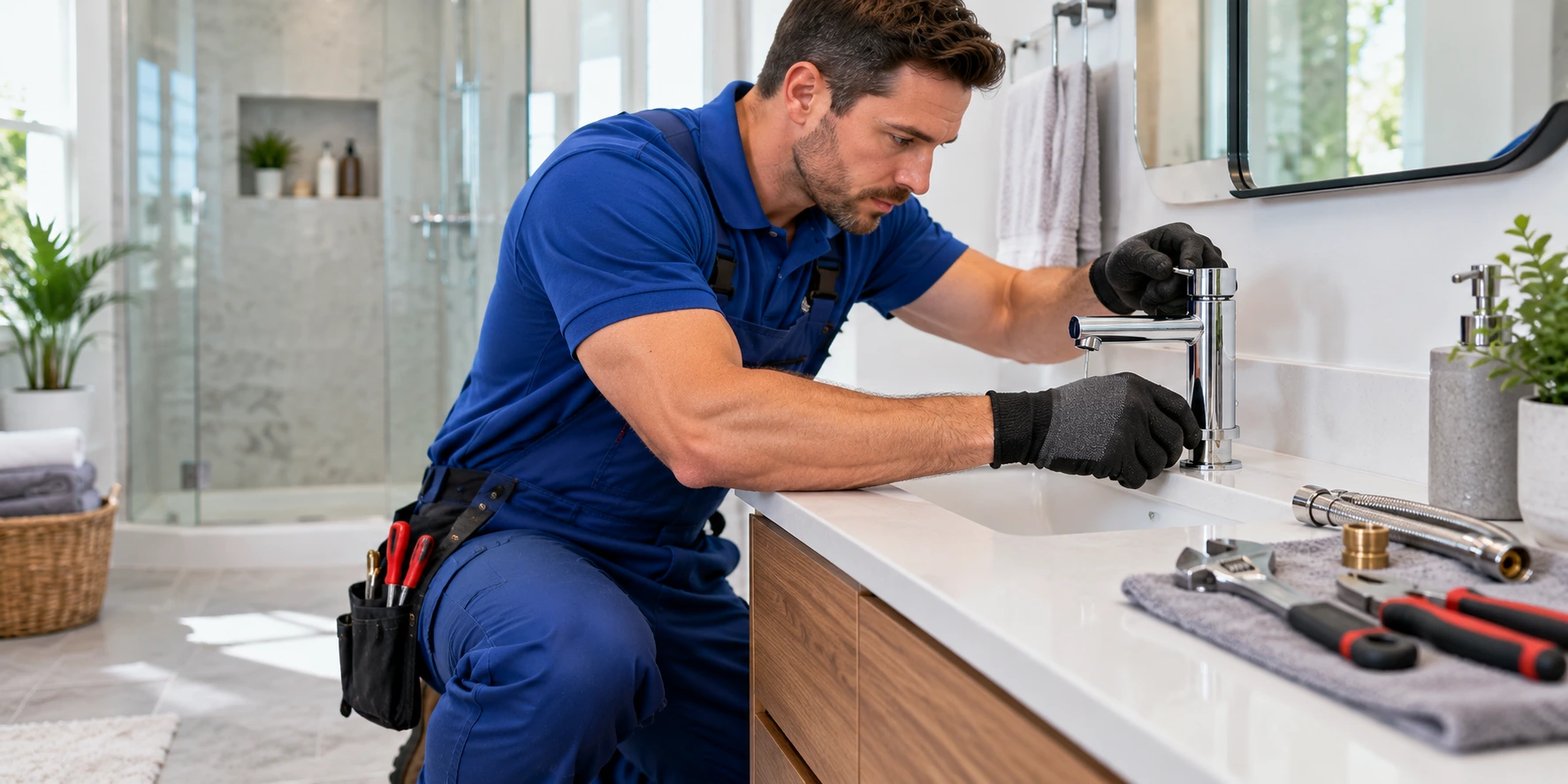
Fixture installation in Cleburne for kitchens and baths
When a faucet keeps dripping or a toilet will not sit still, Cleburne Pipe Pros handles fixture installation in Cleburne for houses, townhomes, condos, and businesses, and we make the same runs through Keene, Rio Vista, Grandview, and Alvarado. We change toilets, faucets, shower valves, and supply stops, and we still look at the pipe that feeds them, because a pretty trim kit fails if the nipple behind it is scaled or thin. Homes and businesses in 76033 also call us for pipe repair, drain cleaning, garbage disposal work, water heater service, and leak tracing when the fixture is only the last clue.
On Prairie Avenue the older houses still carry galvanized stubs under the lavatory, while west-side streets in Baker Farms and Belle Lagos use PEX that wants a different stop and a different bite on the threads. Housing tables put the median year built around 1983, so copper and early plastic still sit in many walls behind the chrome you see. That mix is why a faucet that fits a new powder room can leak on a 1970s ranch if we skip the last nipple.
Pressure at the stop and a valve that still closes come before we cut a supply or open a wall. After the trim is set we recaulk the base, wipe the cabinet, and leave the room usable the same night. Cleburne crews answer 24/7, and the tests below show why that order matters before a new faucet goes on.
Other Services
Contact Us Today!
(817) 506-6604
Open 24 Hours
Reliable plumbing solutions for homes throughout Cleburne, TX.
Professional repairs and installations completed with care, attention, and lasting results.
Need urgent plumbing help? Call Cleburne Pipe Pros for fast assistance with leaks, burst pipes, backups, and other plumbing emergencies.
What we test first at the fixture
Pressure at the last stop
A gauge on the fixture stop tells us what the house still delivers at that point, not at the meter. We compare that number to what the other baths see so a whole-house restriction is ruled out before we blame a cartridge. If the stop is already in the teens, a new faucet will still feel weak, and the job shifts to the feed. Order matters here because a pretty spout cannot fix a starved line.
The last nipple or stub-out
On galvanized the nipple often has lost thread under the chrome, so a new faucet installation leaks even with fresh washers. We look at metal, thread engagement, and whether the stub is copper, PEX, or polybutylene from the 1978 to 1995 window. That check belongs to this visit, because trim kits do not repair a stub that is paper-thin. A sound stub is what lets the new body sit dry.
Whether the shutoff still seats
If a shutoff valve will not turn off, we do not keep twisting until the stem snaps. Travel and a downstream drip after a gentle close tell us the seat is gone, and shutoff valve replacement becomes the first repair so we can work dry. A stop that crumbles is common on mid-century copper around Henderson Street. Closing that valve first keeps the cabinet from filling while the faucet comes off.
Flange height, valve body, and finish
For toilet installation we measure how far the flange sits above finished floor on slab-on-grade ranches, because a low flange makes the bowl rock even with a new ring. Shower valve replacement gets a body check for seized cartridges and missing stops. Same-day diagnosis at these four points tells us whether trim is enough. The last section of supply behind each fixture is what those readings are for.
Fixture problems we see in Cleburne houses
Dripping faucets and worn cartridges
A dripping faucet wastes sleep as much as water when the house is quiet. In Cleburne the drip is often a scored cartridge, a worn seat, or grit from galvanized still in the last few inches of pipe. Faucet repair starts by asking what that last section is made of, because a new handle on a thin nipple will not last.
What you might notice first
- A drip from the spout after both handles are closed
- The hot side weeps while the cold side stays dry
- Blue-green crust on the body or the aerator
- A handle that rotates farther than it did last year
- Spray that pulses when a toilet fills
- A wet supply nut under the deck
We pull the cartridge and read pressure at the stop so we can tell a bad seal from a starved feed. A healthy reading means we replace the cartridge or move to faucet installation of a new body, then we check nipple threads for metal that has gone thin. Along Henderson Street the mix of copper and galvanized makes a night drip a warning that the stub, not only the ceramic disc, is tired.
Toilets that rock, run, or leak at the base
A toilet that rocks on the floor will stain the tile and soak the subfloor long before the tank looks empty. Prairie Avenue pier-and-beam houses can hide a flange that has pulled from the bend, while later slab ranches in Cleburne see the bowl tilt when clay lifts the floor. Toilet repair that only adds wax leaves the rock in place, so we measure flange height before we talk about a new bowl.
Signs it is time to call
- The bowl shifts when someone sits down
- Water rings the base after a flush
- The tank refills every few minutes
- A sour smell at the closet bolts
- Soft tile or a dark line at the caulk
- The handle must be held down to finish a flush
A running toilet is often a flapper or a fill valve, and those parts come off with the water off at the stop. If we can install a new toilet on an old flange because the ring is intact and close to the floor, that is the clean swap. A cracked flange or a closet bend broken under the slab is a different job, and we say so before the new china goes down.
Shower valves that will not mix or hold temperature
Shower repair in Cleburne often starts with a handle that swings from cold to scald with almost no middle. Behind that trim the mixing cartridge may be seized, or the body in the wall may be leaking onto the backer. Remington Ridge PEX showers usually take a different valve body than a 1970s copper stack, so we identify the pipe before we cut tile.
How this shows up in the house
- Temperature that jumps when a toilet fills
- A handle that no longer finds a warm middle
- Drips from the shower head after the valve is closed
- Stains or soft drywall on the other side of the shower
- A volume control that barely moves
- No water on one side after a hard freeze on an uninsulated line
When the cartridge is the only failure we service it from the handle side. If the body is leaking or the stops inside are gone, we replace a shower valve behind the wall after the pipe type is confirmed. A shower that is cold at every bath may belong with hot water heater repair instead of a new trim kit, and the first gauge reading is what separates those jobs. A plumber to install a new shower should still prove mixing and scald protection before the wall is closed.
Supply stops that will not close
The little valve under a sink is what lets us work dry, and when that shutoff valve will not turn off the whole cabinet is at risk. Along US Highway 67 the mid-century houses still hide original stops that crumble when the handle finally moves. We treat a frozen stop as the first repair, not as something to muscle past with pliers.
Clues at the stop and riser
- The handle spins without changing the flow
- A drip from the stem when anyone touches it
- Green crust on the packing nut
- A supply line that stays live after a supposed close
- A cracked oval handle from old force
- Water at the cabinet floor with the faucet off
Gentle travel and a downstream drip tell us the seat is gone. Shutoff valve replacement with a new riser lets the faucet come off without flooding the vanity, and we confirm the new stop actually seats before the finish work starts. If the stop is the only live valve on a scaled galvanized nipple, that nipple comes out too, because a new stop on rotten thread will weep by morning.
Sink, vanity, and kitchen faucet work
Sink installation is more than dropping a bowl in a cutout. The drain has to line up, the stop has to close, and the last stub has to take a supply without splitting. A bathroom sink faucet leaking under the cabinet usually shows first as a dark swell in the particle board, and kitchen faucet replacement the same day only works when those stubs are still sound.
What the cabinet is telling you
- A puddle on the cabinet floor after the dishes
- A sprayer that no longer retracts
- Hot and cold reversed after a prior swap
- A deck that flexes under the faucet body
- Mineral crust at the supply nuts
- A drip from the tailpiece when the sink is full
We dry-fit the deck plate, check hole spacing, and read the kitchen stop before the old body comes out. On west-side PEX the crimp or expansion fitting is what we inspect, while older copper wants a new compression ring rather than a reused ferrule. If the reading is weak at the kitchen only, the last branch in the wall is the suspect, not the handle you bought at the store.
New fixtures on older piping and punch-list trim
New bathroom fixtures fail in two opposite ways in Cleburne. On older piping a new fixture leaks at the supply line because the galvanized nipple or a polybutylene stub cannot take a modern nut. On newer west-side builds, including Fox Meadow infill, punch-list trim can hide a light-duty valve that never mixed well, so the pretty handle is not the part that failed.
Early warnings after a trim swap
- A leak at the new supply the first night
- A shower that never found a true warm setting in a new house
- Chrome that sits proud because the valve is not centered
- PEX that was kinked behind a vanity
- A toilet that marks the floor within a week of set
- Pressure that dropped at every fixture after the swap
We match the new body to the pipe that is really there, and we do not thread a heavy faucet onto a nipple that has already lost its teeth. Punch-list valves come out to the right depth and get a function test, not just a look at the finish. If pressure fell everywhere after the swap, the fixture is not the story, and the feed behind it is.
Before you call about a dripping faucet
A few quiet checks help us know whether the last stop still works and whether the leak is at one fixture or the whole house. None of these steps require tools that can snap a stem. If water is spreading across a floor, skip the checks and shut the house valve if you already know where it is.
Checks that are safe at the fixture
- Look under the cabinet with a flashlight for a wet supply nut
- Try the stop with two fingers only, and stop if it will not move
- Watch whether the toilet flapper drops after one jiggle
- Note if every fixture is weak or only the one that drips
- Read the model on the faucet if the stamp is still visible
Leave these alone until we arrive
- Do not force a frozen stop with pliers
- Do not keep tightening a supply nut on old compression
- Do not stack extra wax under a toilet that already rocks
- Do not open a shower wall before the valve type is known
- Do not put oil on a cartridge hoping the drip will stop
Repair the fixture, replace it, or fix the line
When a cartridge or fill valve is enough
If the body is sound, the nipple has full thread, and the gauge at the stop matches the rest of the house, a parts repair is the honest path. A ceramic cartridge, a flapper, or a fill valve can restore a dripping faucet or a running toilet without pulling the whole fixture. We still confirm the stop seats, because a parts job done wet is how cabinets get ruined. Cleburne ranches from the copper era often need only that cartridge once grit is flushed from the last inches of pipe. The test order stays the same so we do not skip a starved feed that would make the new part look like a failure.
When the fixture itself has to come out
Replace the fixture when the body is scored, the finish has failed through the plating, or the toilet china is cracked at the horn. A rocking bowl with a sound flange is still a candidate for a new toilet, not a second wax ring. Kitchen faucet replacement belongs here when hole spacing, a ruined deck, or a seized sprayer hose makes rebuild a worse bet than a new body. We dry-fit supplies, check the last stub, and only then commit to the finish you picked. A fixture swap that ignores that stub is how a brand-new spout weeps on night one.
When the line behind it is the real problem
Pressure complaints that show up at one pretty faucet are sometimes the line. Galvanized constriction, a polybutylene stub, a slab leak under a rocking toilet, or a buried run that no longer keeps house pressure will make every new trim kit feel like a miss. When the last in-wall pipe is split, pipe repair is the right call instead of another faucet. When the floor is wet and the source is hidden, leak detection comes first so we do not set china on a wet slab. When the buried run from the meter is the failure, water line replacement is the job, not a new toilet. Those three forks are the whole decision, and the gauge at the last stop is what points to each one.
Why homes and businesses call us for fixture work
We test the stop before we buy the trim
A pressure reading and a shutoff test take minutes and save a second trip. We can tell a bad cartridge from a starved branch before the old faucet hits the truck. That order is how we avoid hanging a new body on a nipple that cannot hold. Homes and businesses see the gauge, hear what the number rules out, and then we pick parts that match the pipe.
Parts on the truck from Vantage Dr
Cleburne Pipe Pros loads common cartridges, supply stops, wax rings, and shower bodies at 106 Vantage Dr so a standard swap does not wait on a parts run. Odd-hole kitchen decks and old galvanized adapters still send us to the supply house, and we say that before we start. The truck stock is for the valves this housing actually uses, not a random catalog. Matching the body to copper, PEX, or galvanized is the point of that load-out.
How we leave a bathroom after a swap
After the last nut is set we recaulk the toilet base, wipe the cabinet, and run hot and cold so you can see the mix. Supply lines get a dry paper check at the nut. We do not leave a live drip for later. The room should be usable the same night, with the old parts out of the tub.
Night calls when a supply lets go
Fixture calls come in 24/7 when a stop fails or a faucet dripping all night keeps the house awake. The same four tests still run after dark, because a midnight trim kit on a bad stub fails just like a daytime one. We would rather replace the stop first and keep the cabinet dry than rush the finish. That patience is the whole method, even at odd hours.
How local soil shows up at Cleburne fixtures
Heiden clay and Houston Black clay series swell and shrink under slabs, and that heave can tilt a toilet or stress the last copper stub at a vanity. Summer irrigation dries the yard, drops moisture, and the slab can move enough that a wax ring weeps even though the bowl looks new. Hard freezes and thaw bursts split poorly insulated supply lines in garages and crawl spaces, so a bad faucet is sometimes a cracked riser. We check the fixture and the last section of pipe before we blame the handle.
Keene fixture calls on older and mobile-home streets
Fixture calls in Keene often land on 1970s to 1990s houses and mobile homes where the toilet rocks because the floor is light and the flange has pulled. City of Keene water comes from Trinity Aquifer wells and purchased Johnson County SUD water, a different seller than city water in Cleburne. We still start at the stop on streets off Old Betsy Road, then we decide if the fixture or the last plastic supply is the failure.
Rio Vista faucets along State Highway 174
In Rio Vista the housing along State Highway 174 and Central Avenue is small-town stock, and tired stops under kitchen sinks are a common first finding. City of Rio Vista water is not Cleburne city water, so we do not assume the same scale pattern at the cartridge. FM 916 and the Nolan River edge just tell us which way the lots drain when a vanity leak reaches the crawl.
Grandview showers and wells on McDuff Avenue
Grandview mixes 1970s to 1990s streets with newer growth, and shower valves on those older copper runs seize long before the tile looks worn. City of Grandview water comes from groundwater wells, a different utility than Cleburne, and grit at the cartridge is part of what we flush. McDuff Avenue jobs still follow the same stop, nipple, and mix tests before any trim comes off.
Alvarado trim on 1990s and newer streets
Alvarado has a median year built around 1999, so many houses already have PEX, while older in-town streets still hide copper stops that will not close. City of Alvarado water is its own system, and we treat punch-list valves on the newer side as a function problem, not a finish problem. A rocking toilet on an older in-town slab still gets the flange height check before a new bowl goes down.
Questions about faucets, stops, and showers
Why does a new faucet leak at the supply line in an older Cleburne house?
On older streets the leak is often the stub, not the new body. Galvanized nipples lose thread, copper compression rings bite into soft pipe, and a new fixture leaks at the supply line when that last joint cannot take a fresh nut. We gauge the stop, look at the metal, and replace the nipple or the stop before we blame the faucet. If every bath is weak, the feed in the wall or the buried run needs work instead of another trim kit.
Why will the shutoff valve not turn off under my bathroom sink?
Stops that sit for years freeze in place, and the washer inside hardens so a shutoff valve will not turn off even when the handle moves. Forcing it with pliers often snaps the stem and floods the cabinet, especially when a bathroom sink faucet leaking under the cabinet has already softened the particle board. We replace the stop first, then we do the faucet. On 1970s copper the stop is a common failure, and shutoff valve replacement is the dry, orderly way to start.
Do I need a plumber to install a new shower if the valve is behind the wall?
If the trim is only a cartridge, we can often service it from the handle side. When temperature will not mix, or the body is leaking in the wall, a plumber to install a new shower valve works from the back of the tile. We replace a shower valve behind the wall only after we know the pipe type, because copper, PEX, and galvanized each take a different body. Mixing and scald protection get a check before the wall goes back together.
Can kitchen faucet replacement finish on the first visit on galvanized stubs?
Sometimes. If the stubs are sound we can complete kitchen faucet replacement the same day, including the deck plate and the new supplies. If the galvanized nipples crumble, copper or PEX adapters have to go on before the faucet can sit, and that extra work still happens in one visit when the wall is open enough. A weak reading at the kitchen stop can also point to a restricted line, and then the faucet waits until the feed is sound.
How do west-side PEX lines change a bathroom sink faucet job?
In Baker Farms, Belle Lagos, and Remington Ridge the stub is usually PEX with a crimp or expansion fitting, so sink installation is less about frozen galvanized and more about the stop quality and the punch-list valve behind the pretty trim. A bathroom sink faucet leaking under the cabinet on those streets is often a loose supply or a stop that was never meant to be the last valve. We still read pressure, because a whole-house drop means the meter run, not the faucet.
Questions about toilets and after hours timing
What should I do when the toilet keeps running after I jiggle the handle?
When the toilet keeps running, what to do first is a look in the tank without taking the fill valve apart. A running toilet that refills every few minutes usually has a flapper that is warped or a chain that is too tight, and toilet repair at that level is a parts job if the bowl is solid. If the bowl rocks on the floor or the floor feels soft, wait for us, because extra wax will not fix a low flange. We check the flapper, the fill height, and the flange in that order.
Can you install a new toilet on an old flange that sits on a slab?
When the flange is intact and close to floor height we can install a new toilet on an old flange with the right ring and bolts. On Cleburne slab-on-grade ranches the flange is often low or cracked where clay has moved the slab. We measure height, replace a broken flange ring, and only then set the bowl. If the closet bend is broken below the slab, that is a different repair than toilet installation, and we will say so before we open the floor.
Who handles fixture installation near me in Cleburne after hours?
Cleburne Pipe Pros answers those calls at night and on weekends, because a shutoff that failed or a faucet dripping all night should not wait for Monday. We still run the same tests at the stop, the nipple, and the flange so we do not hang pretty trim on a bad feed. Keene, Rio Vista, Grandview, and Alvarado get the same after-hours fixture work. It helps if the stop location is ready when we arrive.
Fixture installation in Cleburne is the last few feet of supply as much as it is the chrome you see. Toilets, faucets, shower valves, and stops all fail in ways this housing already taught us, from galvanized nipples to punch-list valves on PEX. Neighbors looking for a Cleburne plumber can start with the fixture that will not shut, and the full list of plumbing services covers the lines and heaters when the trim is not the whole story. Cleburne Pipe Pros will keep testing that last section of pipe until the new bathroom fixtures sit dry.
Reach out to us for assistance.
ZIPs we cover: 76033, 76031, 76059, 76093, 76050, 76009