
Garbage Disposal Repair
Cleburne Pipe Pros provides reliable garbage disposal repair and replacement for homes throughout Cleburne. We troubleshoot jams, leaks, humming motors, slow drainage, and units that will not start, helping keep your kitchen plumbing working safely and efficiently.
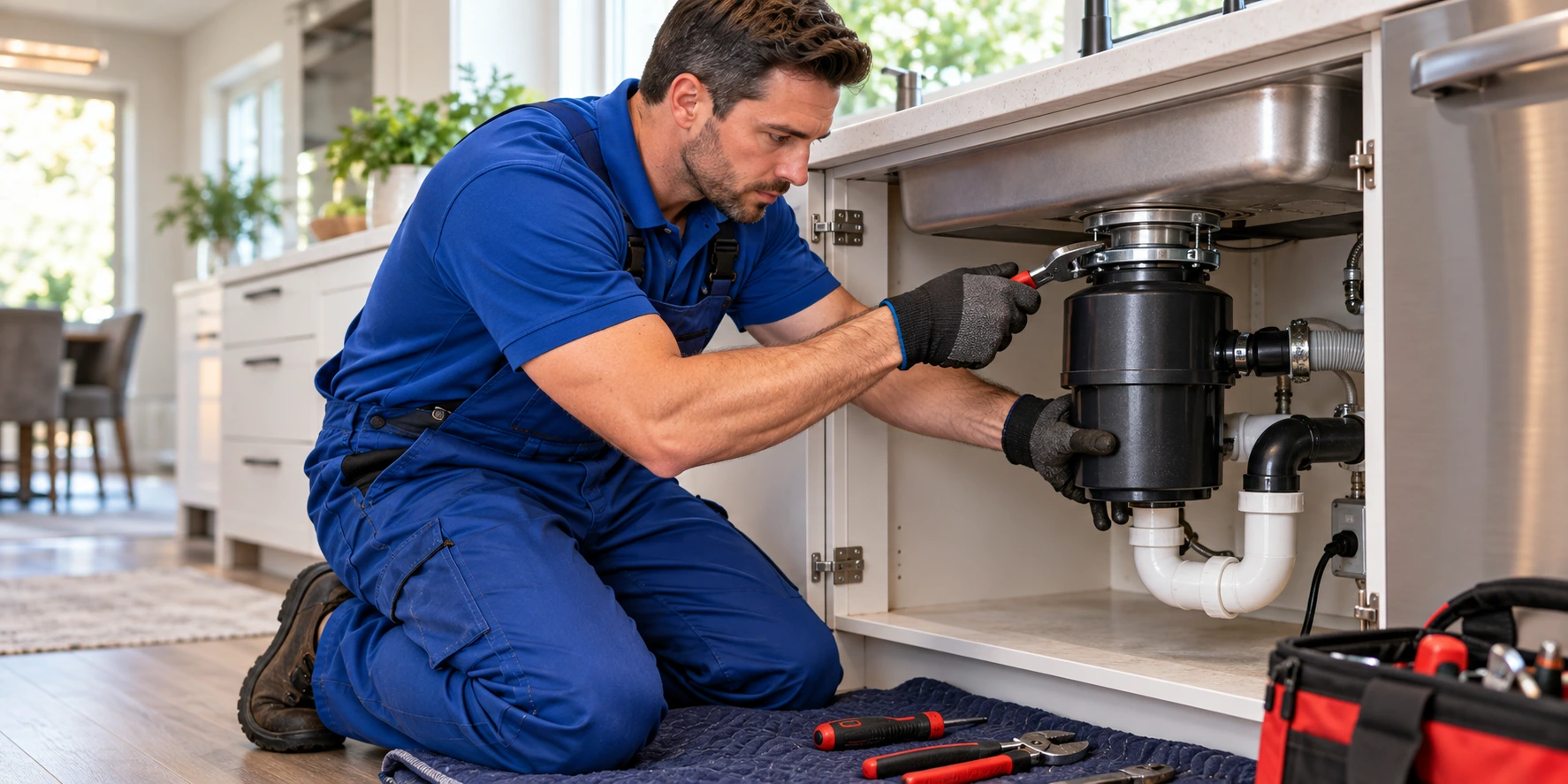
Garbage disposal repair in Cleburne kitchen sinks
When the unit under the kitchen sink jams, leaks, or will not grind, Cleburne Pipe Pros does garbage disposal repair in Cleburne, TX for houses, townhomes, condos, and businesses. We cover the same kitchen work in Keene, Rio Vista, Grandview, and Alvarado when a humming motor or a wet cabinet shows up after hours.
A disposal sits at the end of the house water and drain path, so we also handle drain cleaning, pipe repair, fixture installation, leak detection, water line replacement, hot water heater repair, and emergency plumbing when the kitchen is part of a wider failure. On Prairie Avenue southwest of downtown, many 1890s to 1920s houses still have galvanized steel and cast iron waste arms, and a leaking flange or a belly in that old metal kit is as common as a burned motor.
We work 24/7, and we start with power, the reset button, and a hand check of the flywheel before we open a discharge fitting. Cleburne 76033 kitchens get a same-day diagnosis on the first visit when the call comes in during regular hours, and we leave the cabinet dry and the trap aligned. Next we walk through the tests we run under the sink so you know what each reading rules out.
Other Services
Contact Us Today!
(817) 506-6604
Open 24 Hours
Reliable plumbing solutions for homes throughout Cleburne, TX.
Professional repairs and installations completed with care, attention, and lasting results.
Need urgent plumbing help? Call Cleburne Pipe Pros for fast assistance with leaks, burst pipes, backups, and other plumbing emergencies.
What we test first under the sink
A disposal failure is often a drain failure wearing a motor’s clothing, so we do not start by swapping the unit. Power comes first, because a dead outlet and a tripped reset button look identical from the sink. The flywheel comes next, because a jam that still hums is not a motor replacement.
After that we inspect the flange and the discharge kit, because a leaking garbage disposal is frequently a slip nut, a cracked discharge tube, or a dishwasher hose clamp rather than a cracked housing. Last we open the trap and look down the kitchen waste. A belly in that line will refill the chamber as fast as we empty it, which is how a kitchen waste sag mimics a dead disposal in older Cleburne cabinets.
If the sink is still usable, a few checks help us when we arrive, and a few moves make the mess worse. None of this replaces a visit, and none of it involves taking the unit apart.
Safe checks before we arrive
These steps keep power off the chamber and tell us whether the problem is electrical, a jam, or the drain. Stop if anything feels live or the cabinet is standing in water.
- Flip the wall switch off and look under the sink for a standing puddle.
- Press the disposal reset button on the bottom of the housing once, then wait.
- Confirm the outlet actually has power from another small load on the same receptacle.
- Run the other bowl and see whether water backs up into the other sink.
- Note whether the dishwasher just ran, because that load often reveals a blocked port.
Moves that make a jam worse
The unit can still start while a hand is in the chamber, and chemical opener sitting in a humming housing only pits the kit. Leave the hardware alone until we meter it.
- Do not reach into the chamber while the unit can still get power.
- Do not pour chemical drain opener into a disposal that already hums.
- Do not keep holding the switch when you hear a hum and no grind.
- Do not run the dishwasher again to push a jam through the impeller.
- Do not snug every slip nut until the tubular kit is twisted out of line.
Power, reset, and the outlet
We meter the outlet and the wall switch before we blame the windings. A disposal not turning on is often a dead switch that used to feed a disposal and a dishwasher on the same split. We press the disposal reset button after we confirm power, not before, so we do not reset into a short. If the breaker trips again, we stop and inspect the cord and the windings instead of resetting in a loop. That order rules out the house side before we pull the unit.
Flywheel drag and a humming chamber
With power off, we turn the flywheel from the hex socket under the unit. Free spin with grit in the chamber points to a jam, not a burned motor. A locked rotor with heat in the housing points to a seized bearing or a packed impeller. We only restore power after the flywheel turns by hand, because a jammed garbage disposal will overheat if we keep feeding it. This step is what keeps us from replacing a good motor that only needed the chamber cleared.
Flange, discharge tube, and dishwasher port
Water on the cabinet floor gets blamed on the motor housing, yet most of it starts at the sink flange putty, the backup ring, or the discharge tube. We dry the cabinet, run water, and watch which joint weeps first. A dishwasher hose on the disposal nipple also weeps when the clamp has slid or the knockout was not fully removed on an older install. That test tells us whether we repair a kit or replace a cracked body. Baker Farms PEX houses and Prairie Avenue galvanized kitchens fail at different joints, but the watch-and-dry method is the same.
Trap, waste arm, and the kitchen line
If the unit grinds and the sink still stands, the motor is not the problem. We pull the trap and inspect the waste arm for a sag, a grease belly, and corrosion on galvanized pipe in pre-1980 homes. A camera is next when the kitchen line is the suspect, and that is the same work we describe on our kitchen drain cleaning visits when the backup is past the cabinet. Ruling out the line keeps us from hanging a new disposal on a pipe that will fill it back up.
Jams, dead motors, and grinding noise
A jammed disposal that still hums
A humming chamber with a locked flywheel is the kitchen call we see most after a big meal in the 1970s ranch houses west of downtown. The motor tries to turn while the impeller sits packed with fibrous scraps or a bone chip, and the overload has not tripped, so a steady buzz fills the cabinet. In that stock the discharge tube is often a thin metal kit that weeps while the jam sits, so the cabinet floor gets wet even though the failure started as a jam. Dishes pile up, and a kitchen sink backup looks like a drain failure when it is still just a packed impeller.
What you might notice first
- The unit makes a disposal humming sound, but nothing grinds and the sink stays full.
- The reset button pops soon after the wall switch is flipped.
- A dull buzz comes from under the sink and then stops cold.
- Water stands in one bowl while the other bowl still drops.
- The dishwasher pauses because it cannot dump into the jammed chamber.
- Food scraps float instead of falling through the splash guard.
We kill power at the switch, then turn the hex on the flywheel and pick the chamber from above. A jam that clears and then holds is a repair, not a replacement, and we run both bowls to prove the trap is open. Cleburne ranch kitchens see this after fibrous peels, and holding the switch only cooks the windings.
A unit that will not turn on at all
Silence from the housing is a different path than a hum, because the windings may never be getting power. Mid-century houses along Henderson Street and US Highway 67 still mix copper and galvanized under the sink, and a disposal not turning on is sometimes a dead split-circuit switch rather than an open motor. Shared kitchen loads trip, the reset stays out, and the sink sits unused while everyone assumes the grinder died. Sorting power from windings is what keeps a good unit from going in the truck.
Signs it is time to call
- The wall switch clicks and the chamber stays completely silent.
- The disposal trips the breaker as soon as the switch is pressed.
- The reset button will not stay in after one firm press.
- A nearby GFCI is out and the disposal shares that feed.
- The dishwasher still runs while the disposal stays dead.
- No hum, no grind, and no heat in the housing after a short try.
We meter the receptacle, then the switch, then the cord, and only then do we talk about windings. A disposal reset button that will not hold after power is proven points to a locked rotor or a short, and we stop resetting in a loop. On Cleburne 1980s stock that shared dishwasher circuit is the usual culprit, and proving it is the first repair.
Grinding, rattling, or a hot smell
A unit that still spins can still be on its way out when a lug is broken, a bottle cap is riding the flywheel, or the bearings are dry. The sound is harsh, the splash guard shakes, and a hot smell follows if the switch stays on. Downtown Cleburne mixed stock from before 1950 still has original grinders hanging on old mounts, and those bearings do not get quieter with another reset. Daily use turns that rattle into a leak once the housing walks on the flange.
Sounds and smells that matter
- A metal-on-metal grind continues even after the chamber looks empty.
- The housing rattles against the sink and the mount feels loose.
- A hot or burning smell starts after a few seconds of run time.
- The flywheel turns, then catches, then turns again with a scrape.
- Small hard objects click around the impeller and will not flush.
- The disposal smells and will not clear even after a long flush of cold water.
We pull power, inspect the impellers, and spin the flywheel by hand to feel bearing drag. A broken lug or a burned winding is the point where we stop repairing and hang a new unit on a sound kit. Fox Meadow infill houses with newer grinders more often have a foreign object than a dead bearing, and that is a clear, not a swap.
Replacing a unit that is finished
When the housing is cracked, the windings are open, or the mount has rusted into the sink hole, keeping the old motor only delays a wet cabinet. Garbage disposal replacement is the cleaner path once those parts have failed, because another gasket will not restore a seized rotor. West of State Highway 174, Belle Lagos and Remington Ridge typically have PVC waste, so the swap stays in the cabinet when the kit is sound. Older metal kits still need to be judged before the new unit hangs on them.
Clues the motor is done
- Water weeps through a crack in the housing after every use.
- The flywheel will not turn even with the hex wrench.
- The unit runs, then dies, and will not reset again.
- Rust at the flange has eaten the backup ring and the sink hole.
- The motor hums once, trips, and stays hot to the touch.
- Repeat jams return within a day after a thorough clean.
We match the sink opening, the dishwasher tap, and the discharge height so the new unit does not strain the trap. Electrical is checked so the replacement is not sitting on a switch that already failed. On a Cleburne west side PEX house the swap is usually the cabinet only, and we wipe the toe-kick dry before we leave.
Leaks, slow drains, and first-time installs
Leaks at the sink flange
A wet ring around the sink opening is putty, a loose mount, or a rusted hole, not always a cracked motor. The flange is the joint between the sink and the grinding chamber, and once that seal dries out, every fill of the bowl drips into the cabinet. Prairie Avenue cast sinks and Henderson Street stainless both show this, just at different hole thicknesses. Left alone, the particle board swells and the mount walks, which then leaks even faster.
How this shows up in the house
- A dark ring of moisture sits around the flange after the bowl is filled.
- The unit wiggles when the splash guard is pressed.
- Drips fall from the backup ring, not from the discharge tube.
- The cabinet floor is wet only when the right-hand bowl holds water.
- Putty crumbs collect on the mounting screws.
- The sink hole shows rust at the metal edge.
We support the unit, reset the flange with fresh seal, and tighten the mount in sequence so the sink enamel does not chip. If the hole is rusted through, the sink itself needs work, and that is when fixture installation on a new sink is the sounder path. A dry flange test with a full bowl is how we prove the leak is gone.
Leaks at the discharge or dishwasher connection
Older metal kits in older cabinets fail at slip nuts long before the windings fail, and that is the leak homes and businesses blame on the motor. The 1-1/2 inch discharge tube, the dishwasher nipple, and the trap washers all sit in the same dark cabinet, so a drip at any of them lands in the same puddle. A dishwasher hose that has slid off the clamp also dumps into the toe-kick every cycle. Finding which joint weeps is the whole job.
What the cabinet floor is saying
- Water tracks from the discharge tube, not from the flange.
- The dishwasher hose drips when that appliance runs and the disposal sits idle.
- Slip nuts are stained and the washers are flattened.
- The tubular kit is out of square and stressing one joint.
- A knockout edge is ragged inside the dishwasher port.
- The trap washer seeps only after the disposal has run a full load.
We dry the cabinet, run water, and replace the weeping piece rather than the whole motor when the housing itself is sound. A new discharge tube and clamp on that older metal kit is often the lasting repair. If the waste arm is galvanized and paper-thin, we move into pipe repair on that short run so the kit is not hanging on rust.
A disposal that drains slowly or backs up
A motor that still grinds can still leave the bowl standing if the trap has a belly or the kitchen line is restricted. Grease, peelings, and what not to put down the disposal all collect in that sag, then both bowls rise. Hard freezes can also split a thin discharge tube in an unconditioned Cleburne cabinet, and the leak then looks like a housing crack while the real restriction sits downstream. The sink becomes unusable even though the impeller is fine.
What you might see at both bowls
- Water stands in the disposal bowl after a normal grind.
- The other bowl gurgles and then fills from the waste tee.
- The dishwasher finishes and soap water rises in the sink.
- The trap is heavy and the waste arm sags toward the cabinet floor.
- Slow draining continues after the chamber has been cleaned.
- An air gap on the counter sputters during the dishwasher drain.
We pull the trap before we condemn the unit, because a kitchen waste sag refills the chamber as fast as we empty it. If the indoor run is clear and the backup remains, the line past the cabinet is next, not another motor. A camera tells us whether a section will hold or the kitchen waste has to come out.
Installing a unit in a sink that never had one
Plenty of pre-1940 downtown kitchens and early ranch houses never received a grinder, so dishes are still scraped by hand and the dishwasher has nowhere honest to dump. Garbage disposal installation in that setting is electrical plus a drain kit, not just hanging a motor. The sink hole, the switched outlet, and the waste height all have to exist before the mount goes on. Skipping any of those leaves a unit that looks finished and still will not run.
Reasons a first-time unit makes sense
- The sink has no opening hardware and scraps go in the trash.
- The dishwasher hose currently dumps into a standing tailpiece.
- There is no switched outlet under the sink.
- The waste arm sits too high or too low for a standard housing.
- A new sink is going in and the opening can be cut to match.
- The household wants grinding at the bowl instead of packing the trap with scraps.
We check the outlet first, then the sink thickness, then the trap height, because that order avoids cutting a discharge for a unit that cannot be powered. An air gap or a high loop is part of the dishwasher connection so the hose does not siphon. On Cleburne streets with cast iron waste, we often replace the tubular kit in the same visit so the new install is not sitting on a 50-year-old washer.
Repair the unit or replace the kitchen line
The choice on this call is not always motor versus new motor. Sometimes the windings are fine and the kit is the leak. Sometimes the unit is dead and the line is fine. Sometimes the kitchen line is the whole story and a new disposal would only sit in standing water. We decide in that order after the tests above, not from the first sound at the sink.
When a repair still holds
If the flywheel turns after a jam clear, the reset holds, and the housing is dry, we keep the unit. A new splash guard, a new discharge tube, or a fresh flange gasket is a repair that holds on a motor that still spins cleanly and does not scrape. 1970s to 1990s copper and PVC kitchens in Cleburne often need that kit work more than a new grinder. We run the dishwasher and both bowls before we call it done so a weeping clamp does not show up after we leave.
When replacement is the cleaner path
Cracked housings, seized bearings, burned windings, and rusted mounts are when we go to a new unit instead of another reset. We match the sink hole, the dishwasher tap, and the discharge height so the new housing does not strain the trap. On a west side PEX house the swap is usually the cabinet only. On a pre-1980 galvanized waste arm we may replace the tubular kit in the same visit so the new motor is not hanging on a threadbare slip nut. Electrical gets checked so the new unit is not sitting on a switch that already failed.
When the kitchen line is the real problem
If the unit grinds and the sink still fills, the motor was never the patient. We open the trap, check for a belly, and move into the kitchen line the way we would on any drain call. Clay movement under a slab-on-grade ranch can open a joint on the buried run and feed water back into the disposal chamber. Low house pressure from a corroded meter run is a different problem, and that is when water line replacement is the right work rather than another kitchen visit. Replacing the disposal in that case would only reset the clock on the same backup.
What Johnson County clay does to a kitchen line
Heiden clay and Houston Black clay both shrink and swell under Cleburne slabs, and that movement shows up at the kitchen as a waste line that sags or shears after the disposal. Summer heat and yard irrigation dry the clay, drop moisture around the slab, and pull on the buried kitchen tie-in until a belly forms. Hard freezes then burst a poorly insulated discharge tube in an unconditioned cabinet, so a leak that looks like a failed motor is sometimes ice damage on the kit. We treat the disposal and the kitchen line as one path so we do not hang a new unit on a pipe that will fill it again.
Town kitchens we work beyond Cleburne
Keene kitchen disposals
Keene sits in Johnson County and takes water from Trinity Aquifer wells plus purchased Johnson County SUD water, which is a different supply than Cleburne city water. Housing from the 1970s through the 1990s, plus some mobile homes along Old Betsy Road, often means tight cabinets and light-duty drain kits under the sink. A jammed unit in those kitchens is frequently a packed impeller plus a shallow trap, and we check both before we talk about a new motor.
Rio Vista sink units
Rio Vista runs on City of Rio Vista water, and the small-town houses along Central Avenue and FM 916 sit near the Nolan River on the west side. Cabinets are tight, waste kits are often original, and a leaking unit shows up as a swollen toe-kick long before anyone looks at the motor. We treat the flange and the discharge first, then the trap, because those older joints fail in the same pattern we see on Cleburne’s older streets.
Grandview disposal calls
Grandview is also in Johnson County and bills City of Grandview water from groundwater wells. Mixed 1970s to 1990s streets plus newer growth near McDuff Avenue mean we see both metal tubular kits and newer PVC, so a unit that drains slowly may be grease in an old trap or a simple jam in a new chamber. We test the motor and the waste arm the same way we do in Cleburne so the grinder does not take the blame for a sagging line.
Alvarado first-time installs
Alvarado bills City of Alvarado water and has a median year built about 1999, with 1990s to 2010s growth plus older in-town streets off Interstate 35W. Newer houses usually have PVC waste and a switched outlet ready for a first-time unit, while older in-town kitchens need a kit and an outlet check first. We sort that on the first visit so an install does not stall on missing power.
When the disposal is not the only problem
When the kitchen line needs a cable
If both bowls rise while the impeller still spins, the restriction is past the housing and a new motor will not move it. That is the point where drain work, not another reset, is the right call, and we say so before parts go in.
When the waste arm needs a repair
A paper-thin galvanized arm or a cracked tubular kit will leak under a brand-new housing just as it did under the old one. Short-run pipe work in the cabinet is what makes a replacement last, and we do that before we hang the motor.
When a wet cabinet hides another leak
Water that appears under the sink is not always the disposal kit. If the puddle returns with the unit off and the trap dry, leak detection is the next step so a supply drip or a slab issue is not blamed on the grinder.
Questions about jams, power, and leaks
Why does a jammed disposal hum but refuse to grind?
When the flywheel locks, the windings still receive power, so the housing buzzes and the impeller does not turn. That garbage disposal jammed and humming noise means the motor is alive and the chamber is packed. We cut power, turn the hex under the unit, and clear the splash guard from above. If it hums again after a clean chamber, we check bearings and a packed discharge tube. Holding the switch only cooks the windings, so we stop that test as soon as we hear a buzz with no grind.
How do we reset a garbage disposal that will not start?
The red button under the housing restores a unit after a jam overheats the overload. We confirm the wall switch and the outlet first, because a reset on a dead circuit does nothing. After power is present, one firm press on the disposal reset button and a short wait is the sequence. If it clicks off again, we look for a locked flywheel or a short in the cord instead of resetting in a loop. Older Cleburne kitchens share a split circuit with a dishwasher, and that shared load is a common reason the button will not hold.
Why is the disposal leaking from the bottom of the cabinet?
Water on the cabinet floor is often blamed on a cracked motor, yet a disposal leaking from the bottom usually starts at a joint. We dry the wood, run the sink, and watch the flange, the discharge tube, and the dishwasher hose in that order. Slip nuts on older metal kits in Prairie Avenue cabinets weep first. A slow drip at the dishwasher nipple shows up after the knockout was left ragged on an install. Only after those joints stay dry do we treat the housing as cracked and talk about garbage disposal replacement.
Why does water back up into the other sink when it runs?
A dual-bowl sink shares a waste tee, so a jam or a grease belly on the disposal side will push water back up into the other sink. We pull the trap before we condemn the motor, because a kitchen waste sag refills both bowls. If the unit grinds and both bowls rise, the kitchen line is the restriction and drain work comes next. Grease from holiday cooking in Henderson Street mid-century houses builds that belly quickly. Clearing the chamber alone will not hold if the waste arm still sags.
Questions about replacement and after hours
Who handles garbage disposal repair near me in Cleburne after hours?
Cleburne Pipe Pros takes kitchen disposal calls after hours because a leaking kit soaks particle board overnight. We still start with power, the reset button, and the flywheel, even late, so we do not replace a unit that only needed a jam cleared. If the housing is cracked or the windings are open, we hang a new unit once the drain kit is sound. If the backup is in the kitchen line, we say so rather than hide a drain problem inside a new motor. The work stays on houses, townhomes, condos, and businesses, any hour.
Can you replace a garbage disposal the same day on a west side house?
On Baker Farms, Belle Lagos, and Remington Ridge we can often replace a garbage disposal the same day when the drain kit, the outlet, and the dishwasher tap are already in good shape. Newer PVC waste and a sound discharge make the swap a cabinet job, not a wall job. Testing on the first visit tells us whether the line is clear before we hang the new unit. If the waste arm is galvanized and thin, we repair that path first so the replacement does not sit on a failing joint. West side PEX houses are usually the simpler swap.
What does it take to install a garbage disposal in an older kitchen?
To install a garbage disposal in an older kitchen we need a sink opening that will take the mount, an outlet that is switched, and a waste arm at the right height. Downtown Cleburne pre-1950 sinks are sometimes too thin or too thick for a modern mount, so we check that before we cut a discharge. The dishwasher drain has to tap the disposal nipple with the knockout removed, and an air gap or a high loop keeps that hose from siphoning. Electrical comes before plumbing so we are not hanging a unit on a dead switch. Cast iron waste on those older streets may also need a new tubular kit.
Why does the dishwasher drain into the sink after a new unit?
If the dishwasher drains into the sink, the nipple on the disposal is either blocked by a knockout that was never punched, or the hose sits below the flood rim without a high loop. Food and soap then flow backward when the disposal runs. We pull the hose, check the port, and reroute the high loop under the lip of the counter. A dishwasher backing up into the sink after an install is a kit problem, not a pump problem on the dishwasher. Fox Meadow infill houses usually already have the port open, while first-time installs in older cabinets are where we see the knockout left in.
Kitchen grinders fail at the jam, the flange, the discharge kit, and the waste line, and Cleburne Pipe Pros sorts those in that order for houses in Cleburne and the nearby Johnson County towns. From the shop on Vantage Dr we test power and the flywheel before we cut a fitting, hang a new unit only on a sound trap, and leave the cabinet dry. The same crew covers the drains and the hot water heater those lines feed, along with the rest of the plumbing services on a residential call. When the sink is down, we are available 24/7, and the work stays on the unit and the line that actually failed. For a wider look at how we work through a house, start with our Cleburne plumbing overview.
Reach out to us for assistance.
ZIPs we cover: 76033, 76031, 76059, 76093, 76050, 76009